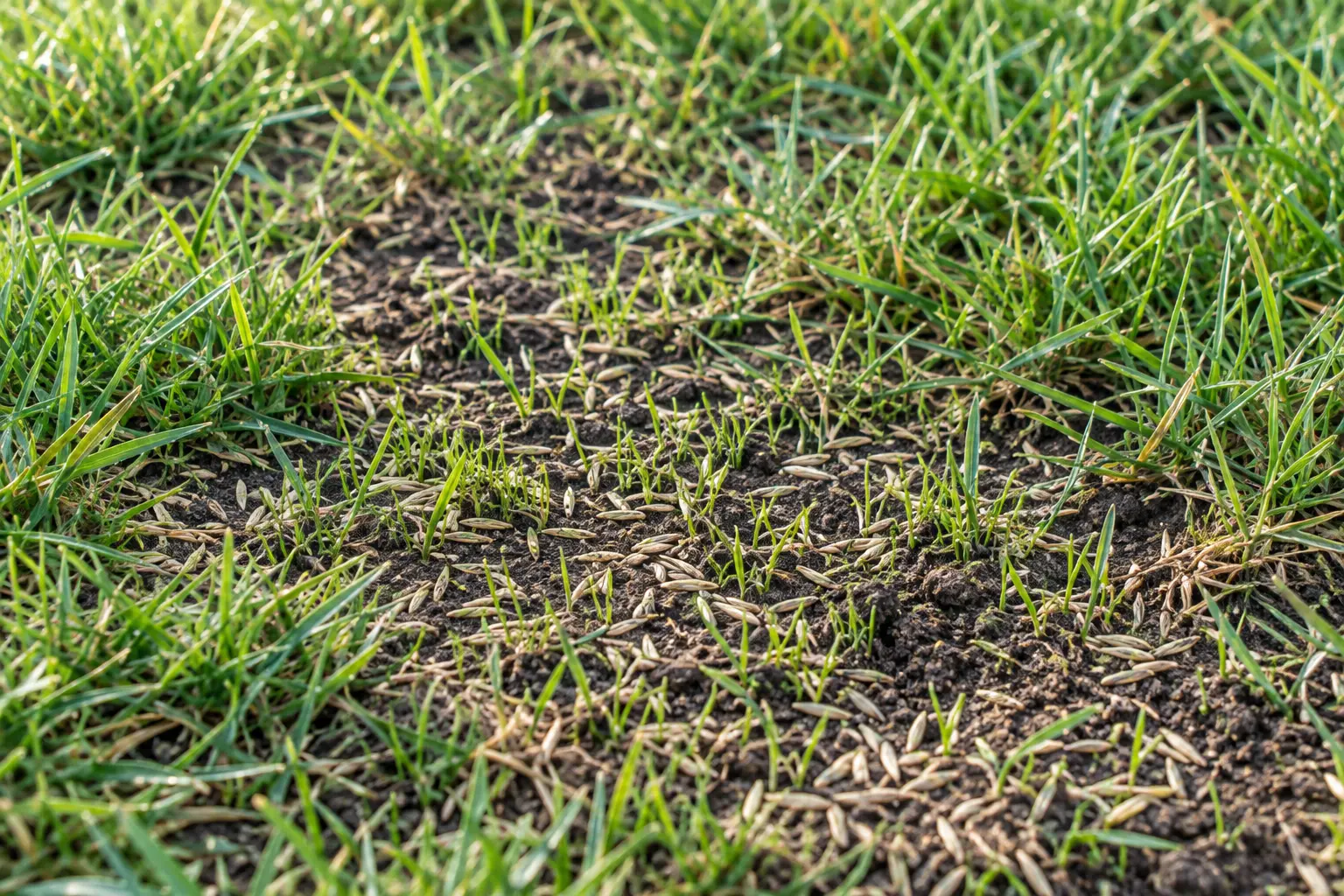
What overseeding does
Overseeding adds seed to an existing lawn to help fill thin areas. It is different from establishing a completely new lawn, and the condition of the existing grass, soil surface, shade, drainage, and traffic can all affect the scope.
Why timing and preparation matter
University of Missouri Extension identifies early fall as a suitable establishment period for cool-season grasses in Missouri. Actual suitability still depends on the date, weather, grass type, and property conditions. Seed needs useful contact with the soil; seed left above dense thatch or compacted surface conditions is less likely to establish well.
What to expect after seeding
Germination time varies by seed type and conditions. Soil temperature, moisture, seed quality, weather, sun exposure, and preparation all affect the result. Overseeding improves the opportunity for new grass to establish, but it does not guarantee complete germination or a uniform result in every area.
A good fit for
- Established lawns with thin, worn, or bare areas that are suitable for fall seeding
- Homeowners who can follow a consistent watering plan after seed is applied
What shapes the price
- Total lawn area and the amount of thinning
- Existing soil surface, compaction, thatch, and preparation needs
- Seed choice, access, shade, slope, and watering conditions